



In order to be able to support the emotional and mental health of children it is important to understand how children develop and what can get in the way of that process.
Early relationships shape emotional and social development and this begins during pregnancy, when a baby’s brain is developing rapidly and can be influenced by the physical environment of the womb, as well as the wider environment and relationships.
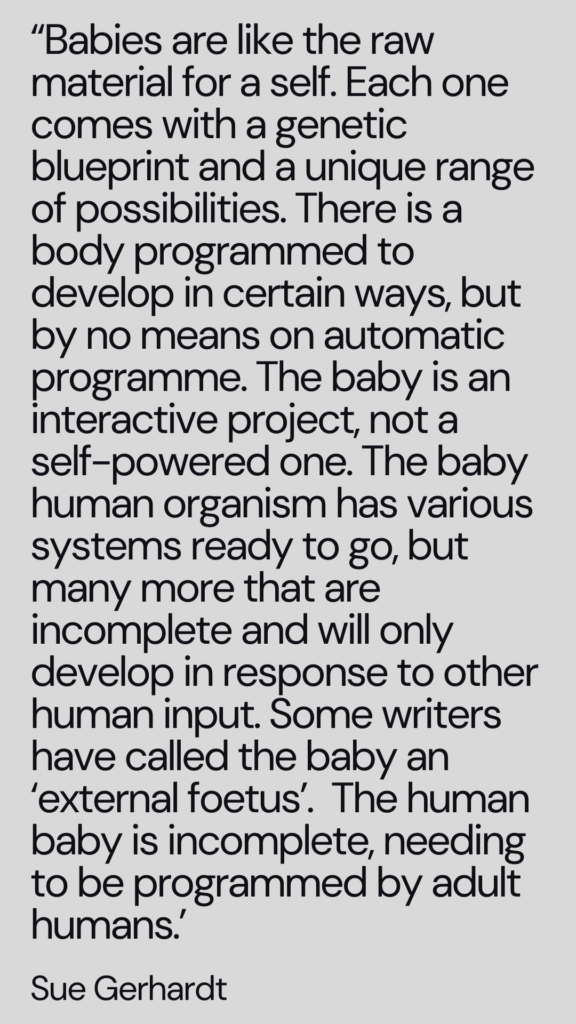
This is illustrated by a quote from Sue Gerhardt, taken from her widely influential book about attachment in children, Why Love Matters:
Nurture and love are essential to the development of the social and emotional brain systems in these formative early years. All attention and interactions will impact babies brain structures. Caregivers who are responsive, sensitive, consistent and caring will help to trigger the development of the ’emotional brain’. The pre-frontal cortex plays a vital role in managing emotions, picking up on social cues, non-verbal communication, enabling empathy and helping with emotional regulation. As you can see below, the developmental focus for the emotional centre of the brain is 0-5 years old.
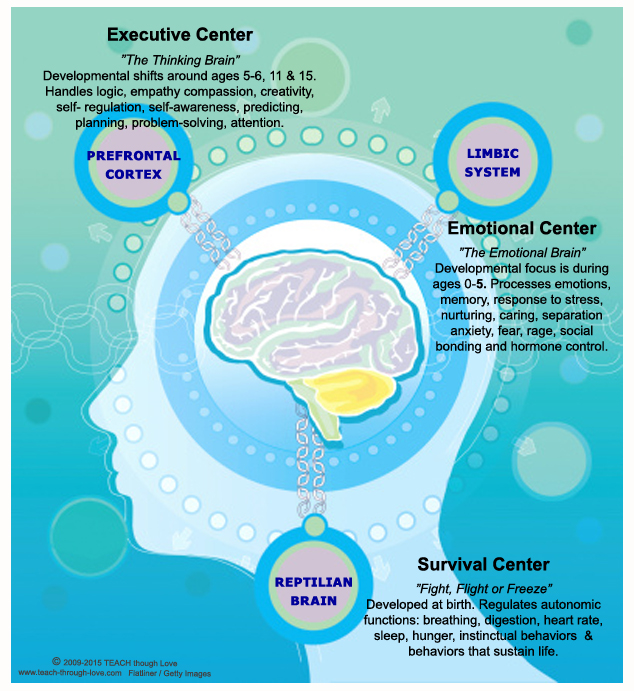
Image credit: Teach through Love www.teach-through-love.com
You can start seeing social and emotional development milestones within the first few weeks and months after a baby has been born with examples such as:
- Beginning to develop a social smile
- Enjoying playing with other people and may cry when playing stops
- Becoming more communicative and expressive with face and body
- Imitating some movements and facial expressions
You can find out about other early emotional and social milestones here:
Many psychologists have studied how we develop socially and emotionally. One example is Erik Erikson. Erikson was a developmental psychologist and psychoanalyst who developed a theory on the psychological development of human beings. His theory is outlined in the video below:
Erikson’s theory can provide a helpful way to think about some of the different conflicts and challenges that people may face as they develop and help us consider the impact these could have on mental health. It also emphasises the important influence of relationships on development and how early experiences may impact on future development.

Stop and Reflect:
Now consider this theory for yourself…
- According to Erikson’s Psychosocial Stages of development, in what stage are you?
- Do you believe you are facing the challenge described by Erikson? Why or why not?
Having insight into a child’s stage of development and what might be going on in their brain can help us understand children better. With this understanding we are better placed to help support their mental health.
Read more about how emotional development begins early in life below:
National Scientific Council on the Developing Child (2004). Children’s Emotional Development Is Built into the Architecture of Their Brains: Working Paper No. 2. Retrieved from www.developingchild.harvard.ed

Apply Your Thinking:
Babies and young children experience their world through the relationships they build. It is these relationships that have such an impact on mental health and wellbeing. Consider the following child:
- Ben, age 3, has experienced good early relationships with adults who are consistently responsive to his needs. How might he present in an early years setting? In what ways might these relationships equip him and impact the way he relates to those around him?