Bronze

Courses tagged with "Bronze"

Manchester Metropolitan University logo and strive

Welcome to STRIVE


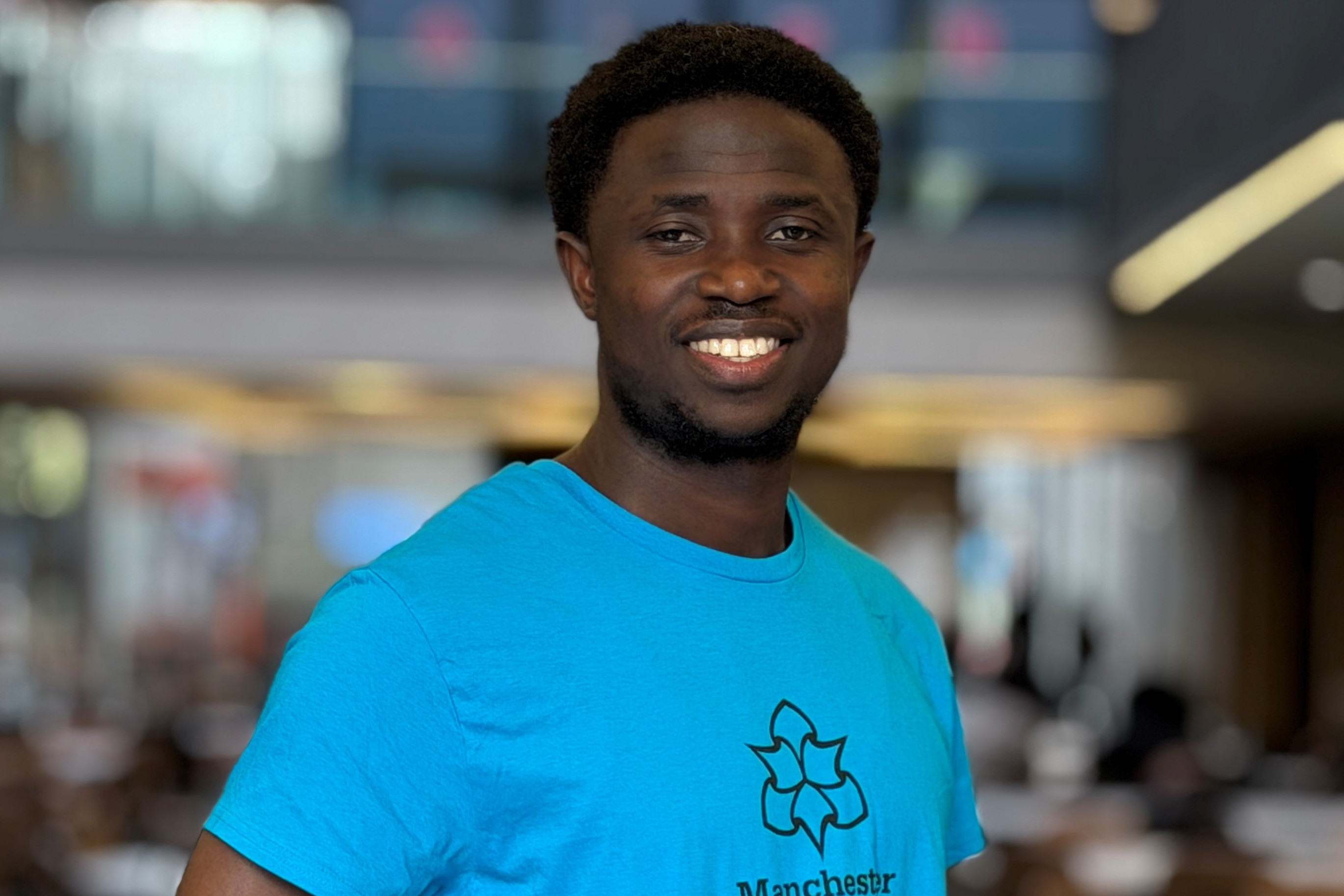
I would recommend this programme to any student because it’s an opportunity to know yourself better and there is a lot to gain in terms of cultural understanding to be a good leader and to help others strive in their life!       

                                                                       Atta Timothee Kouame

   
Attachment.jpeg

STRIVE Alumni, Yahya achieved a first class degree (with Hons) in Geography and a fantastic graduate role working as a senior researcher for a social environmental consultancy. Below Yahya shares the impact of his experience with  STRIVE:


Introduction by STRIVE Founder and Academic Lead Prof. Iwi Ugiagbe-Green

Introduction by Academic Director, Prof. Iwi Ugiagbe-Green (Access transcript here)

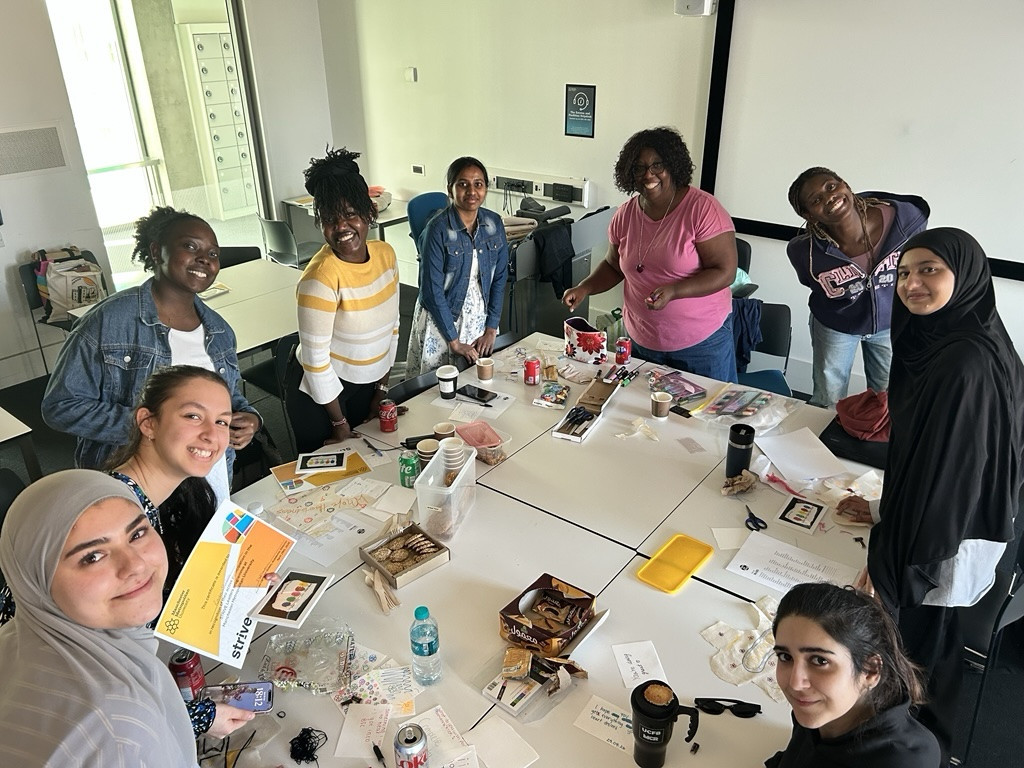
STRIVE Communities

safe learning spaces, togerher we grow, reach your potential, inclusive community, value your difference, everyone matters

Benefits of the STRIVE Programme

Welcome by Vice-Provost and Pro-Vice Chancellor Education, Prof. Andy Dainty

LATEST OPPORTUNITY 

Interested in becoming a STRIVE Leader? The link to join the 2026-2027 programme will be shared shortly. Please return here to check. 

JOIN OUR COMMUNITY! 

Please complete this form to become a STRIVER and be kept up to date with our latest opportunities.

STRIVE MENTORS

If you are staff or alumni, please be in touch if you are interested in joining our team of Mentors. You can get in touch with us by emailing:  strive@mmu.ac.uk


By engaging with STRIVE you have the opportunity to earn the STRIVE digital badge hosted on Rise. To earn this badge you will have demonstrated engagement with a wide range of challenging and stretching personal and professional development activities. These activities may range from academic coaching excellence, mentoring or employability focused sessions. You will also have engaged in reflective practice to better understand and learn from your experiences and the impact your experiences have had on your personal and professional development.

Your engagement with STRIVE will also earn you Rise points. These build towards your STRIVE digital badge and any other Rise digital badges associated with different events, activities or resources. You can also self claim for your engagement where prompted on the site. All your engagement will appear in your Rise portfolio and work forwards the opportunity of submitting a Rise assessment for additional co-curricular practice credit.

CONTACT US: strive@mmu.ac.uk

Finding your way through STRIVE 


Category: Community
Course Duration: 10 hours
Skill Level: Beginner
Points: 50
  • Collaborate, forming networks to share and broaden knowledge
  • Recognise and respect diversity and differences in cultures beyond your own
  • Cultivate awareness of disciplines within a wider global context
  • Contribute positively to communities, both local and global, recognising personal impact on both
  • Influence others through skills of communication, negotiation and leadership

Being Connected isn’t just about what you know, it is how you share knowledge, build relationships and create impact.

By following this pack, you will learn about the different opportunities available to become more connected on campus and in the wider world, giving yourself an excellent foundation to develop your skills, confidence, personal/professional development and future employability.


C-J Foster is an Experiential Learning Tutor for the Rise team, creating this pack in collaboration with Ffion Evans (Director of Education for the Faculty of Health & Education) and Kathryn Cribbin (Student Union)

Close‑up of several bees on a wooden surface with more bees flying in the blurred background
Category: Community
Course Duration: 10 hours
Skill Level: Beginner
Points: 50

Learn to solve problems creatively, with a focus on creating innovative solutions, prototyping and communicating ideas.

This Design Thinking course will help you develop your ability to creatively solve problems.

It’s the second part of a two part course and it explores the second half of the Design Thinking Process. We’ll be looking at ideation and prototyping. If you’re joining from part 1, welcome, If you’re new, you can do this part without doing part 1, but we’d recommend that you go back and do part 1, which was about understanding our problem space and the people within it.

One of the key components of Design Thinking is being human centric, meaning you really do have to know your audience, and another key mindset is that we have to be willing to challenge our thinking and maybe reframe our problem so I would really recommend giving that half a go.
Another tenant of this process is that we continuously learn by doing and iterate on our work. The main way we do that is by creating prototypes and using them to test our ideas. That’s why Design Thinking methods can particularly help when you have a complex or fairly novel problem.

In this course We’ll explore how to have an idea, how to choose the most suitable idea, then how to create something quickly that you can test with your audience. If you have a project you want to take through this process as we go through the course, wonderful. If not, I’d recommend that you come up with a hypothetical idea so you can have a go at some of the processes.

Category: Community
Course Duration: 10 hours
Skill Level: Beginner
Points: 50

There are more than 82 million forcibly displaced people in the world; over 20 million of whom have refugee status. Conflict, persecution and a well founded fear for their lives are some of the reasons why people leave their homes and countries. These people are looking for somewhere safe to rebuild their lives and start a new life free from persecution or threat. This self-study pack will explore the myriad of reasons why people leave, look at the journey they must undertake to find safety and unpack the challenges and barriers they face at different stages.

By the end of this course, you will have a better understanding of the terminology used around refugees and asylum seekers, as well as knowing more about what happens when people arrive in the UK.
This course is ideal for those who want to know more about refugees in general, as well as those who might go on to volunteer and work with people seeking sanctuary.
This course focuses on refugees and the migration of people in the last 20 years or so. It does not provide a comprehensive history of the movement of people prior to the year 2000.

Please note – all facts and figures are correct as of the publication date of the Self Study Pack. For the most up to date information, follow the links provided to external resources.

Category: Community
Course Duration: 10 hours
Skill Level: Beginner
Points: 40

Explore one of the ten pillars of the industrial strategy

On this course, you’ll explore the latest research that’s contributing to the decarbonisation of the UK.

You’ll explore the current targets which are forecast to be met using technologies and solutions such as hydrogen in the gas network and large-scale deployment of fuel cells.

You’ll learn about the future green skills economy and equip yourself with the skills to be part of the workforce that helps regions achieve their carbon net zero targets.

You’ll also consider the impact of the successful meeting of these targets on climate change and sustainable industrial development.

Category: Community
Course Duration: 10 hours
Skill Level: Beginner
Points: 40
Learn about the applied principles of Behaviour Design; the ways in which design principles can be used to positively change the behaviour of individuals, communities and societies.
At some point haven’t we all wanted to change our own behaviour? Or that of someone else? Behavioural Design does just that. It’s a design process that aims to positively change people’s behaviour. In this self-study pack you will discover the process and tools of Behavioural Design. Dive deep into behavioural science and combine it with Design Thinking and Systems Thinking.

Don’t be put off by ‘behavioural science’. You don’t need any pre-existing knowledge to take this self-study pack. I will walk you through each step and build your knowledge along the way.

This is a self-study pack of doing. You will learn the theory and apply the theory. Early on you will select a problem and use it as a learning tool to target, explore, identify, ideate, measure and monitor your behavioural design solution.

Welcome to behaviour and design.
Category: Community
Course Duration: 20 hours
Skill Level: Beginner
Points: 60

Learn to solve problems creatively, with a focus on developing understandings and exploring the nature of problems from the perspective of end users.

The Design Thinking course will help you develop your ability to creatively solve problems.  It will take you through understanding the problem space and the audience through to ideation, design and prototyping. It’s split into two self study packs, Design Thinking 1 (this one) that looks at understanding your problem and audience and Design Thinking 2, which looks at creating ideas, prototyping and testing. We’d recommend doing both courses. You can complete this course if you have no previous training in design. It’s both theoretical and practical. 

Design Thinking methods can particularly help when you have a complex or fairly novel problem, so it’s often used when solving societal issues. And can design a new intervention to help. Maybe a product or a service. 

During this self study pack we’ll be looking at where Design Thinking came from, what it is and how and when to use it. We’ll then move on to getting to grips with understanding a complex problem space and finally we’ll look at understanding the audience of your design and some research methods and techniques to do that, particularly research that is favoured by the Design Thinking process.

Alongside learning and reflecting on Design Thinking concepts, we will give you a fictional problem to work through through the course. The course is also ideal if you have a real world problem that you might like to work through during the self study pack.

Category: Community
Course Duration: 10 hours
Skill Level: Beginner
Points: 40

Learn how to best teach Creative Writing as a subject

Creative writing is used in school, college, and university settings worldwide as a subject in its own right, and as a teaching technique for exploring and communicating ideas in almost any discipline.

It’s also increasingly being used within health and social care and criminal justice settings for therapy and personal development.

On this informative, three-week creative writing course, you’ll gain all the skills you need to teach creative writing in your context.

Discover various settings in which creative writing is best used

You’ll get engaged in the debate about the value of creative writing and its uses, and will learn about the various contexts and ways in which creative writing is used. These include:

  • As part of health and social care
  • As a community-building tool
  • A way to develop confidence and empathy
  • A tool for exploring and communicating ideas

Understand the best practices to begin teaching creative writing

You’ll reflect on the ethical considerations when teaching creative writing, and will develop an awareness of safeguarding particular personal issues when practising your teaching in order to make the workspace ‘safe’.

Finally, you’ll develop practical teaching skills and ideas that can be implemented in a variety of situations. This knowledge will help you finetune and model your overall writing process so that you can teach creative writing to your best ability.

Learn from the experts at the Manchester Writing School

The Manchester Writing School at Manchester Metropolitan University hosts the largest English and creative writing masters programme in the United Kingdom. You’ll be guided throughout by 27 active researchers and teachers within the creative writing field.

Category: Community
Course Duration: 10 hours
Skill Level: Beginner
Points: 50
Get yourself ready to leave halls and become part of Manchester’s community.
Res Life to Residential is a programme designed to getting student ready to leave halls, find new student accommodation and integrate into the local community.  
 
These sprints will help you find a house or private room, integrate into the community and decide which letting contract is right for you.

In part one you will look at:
– How to find a house
– Popular student areas to live
– Different types of house contract
– The difference between living in shared house and private halls
 
In parts two, three and four you will look at:
– Tips when leaving halls
– What to do when you move into your new house/flat
– How best to liaise with your landlord
– Integrating into the local community
– Being safe
– MMU support
– Top tips for being a good house/flatmate

Watch the video in each sprint then click ‘Mark Complete’ before moving on to the next one.
Category: Community
Course Duration: 1 hour
Skill Level: Beginner
Points: 5
Learn to listen to, and advocate for, communities and the people within them – and to bring about real change.

Do you want to know how you can make positive changes in your communities? If so, ‘How to be a Community Advocate and Make Change’ is the course for you. You don’t need lots of money and power to make a difference. You just have to be committed to working with others in the community to make the changes your community wants to see. This course will give you the chance to learn from a number of community advocates who have worked with communities across the North to make positive changes. This course aims to inspire you about the potential of being a community advocate, while giving you some guidance and tools to be one in your communities.

At the People’s Powerhouse, we work with so many fantastic community advocates from across the North who work with their communities to make meaningful changes. In this introduction, you met one of them, Nazir Afzal OBE. Nazir is the former Chief Crown Prosecutor for the North West, and first practicing Muslim to be appointed to this post, who focused his efforts on tackling cases involving violence against women and girls, child sexual exploitation and honour based violence. He supports a number of organisations to make an even bigger difference to their community, including Hopwood Hall College in Greater Manchester, the Welsh Government and the People’s Powerhouse, working to amplify the voices of people in the debate about their future.

We believe that any of you can be a community advocate and make change. Whether you are studying business, the arts, sciences, politics or law, if you want to make a difference in your community, then this course is for you and it will help you get started.

In this course, you will learn what a community advocate is, some examples from history and how you can be one.  You will learn about it directly from community advocates themselves, people who have and continue to make a difference in their communities every day. From them, you will learn about some of the key principles of being a community advocate and the practical steps and actions you can take to be one. The course will then help you apply what you have learnt and take the next steps in your journey as a community advocate.

We hope you will take the course and get started on the next part of your journey as a community advocate.

Category: Community
Course Duration: 10 hours
Skill Level: Beginner
Points: 40

In this Self-Study Pack, we’ll begin learning about how volunteering can impact your student journey and right through all stages of your life. Start now to unlock amazing volunteer opportunities through Rise at Man Met!

We will explore the benefits and impacts of volunteering on you and others, as well as engaging with critical perspectives relating to volunteering, power and racism. We will grapple with the scale and scope of volunteering, the contexts where it takes place, and opportunities available to YOU! We will situate your interests at the heart of the prompts and activities, asking you to think about how you might wish to learn or develop through acts of service and volunteering opportunities.

The Self-Study Pack offers space for you to reflect on your personal motivations and drivers and to become more aware of your own strengths and how you might want to grow and develop through volunteering. Throughout this learning, we will be directing our focus both inwards to explore ourselves, and outwards, to think critically about the impact and benefits of our actions when volunteering.

You will finish this Volunteering and Service Learning Passport course and gain access to specially selected opportunities across Manchester and across various sectors. Learn about yourself, think about how you want to volunteer, and take time to develop skills and ideas that you can use when applying for exciting volunteer roles. This course is your passport into volunteering!

Category: Community
Course Duration: 10 hours
Skill Level: Beginner
Points: 50

This intensive will give you an insight into today’s deaf world, the barriers deaf people face on a daily basis and strategies and communication tactics to help overcome these barriers. We’ll begin to learn British Sign Language and explore conversation techniques that will enable, encourage and give you the confidence to interact with deaf people going forward.

Category: Community
Course Duration: 10 hours
Skill Level: Beginner
Points: 50

Welcome to Alternative Perspectives in Education.

This has been a collaboration of contributions from a number of educators within the university. During this Self Study Pack, we will explore ways to engage with learning outside of mainstream and formal learning environments. This Self Study Pack is open source meaning that you’re not going to need to log in or require any special access for any of the material. But it also means that there are plenty of opportunities should you wish, to explore the ideas further by engaging in wider reading, and we really encourage you to do this.

We will start this unit by exploring our context, gaining an insight into the ideology, pedagogy and theory that sits behind the education today. We will then move on to look at the place of creativity and its impact on learners as well as different models for learning. We will also explore alternative learning environments including a range of progressive educational spaces, forest schools and some global initiatives. Changing tact, we will explore the ‘soft skills’ of education and the role and impact of the educator, before we finally participate in a hypothetical exploration of how the future learner may experience education.

As you progress, you will have opportunity to map your own learning journey. By the end of the Self Study Pack you will have created a snap shot of both your own journey as a learner and also as either an educator yourself, or influencer of other learners. We hope you enjoy.

Category: Community
Course Duration: 10 hours
Skill Level: Beginner
Points: 40

What could be included in heritage and how can looking at objects, collections and nature connect with people today? We will look at the value and potential of engagement and look at examples of objects and engagement from Manchester and around the UK.

In this intensive you will learn more about how to create engagement activities that use heritage as a starting point. You’ll learn about practical techniques to help people make connections between their own lives and heritage. You’ll discover innovative work that heritage sites and museums are co-creating with communities in Manchester. And you will build awareness of useful toolkits, organisations and websites that can help you harness the power of heritage.

Category: Community
Course Duration: 10 hours
Skill Level: Beginner
Points: 40
If you want to become an advocate for mental health, this course is for you. You will find all the tools and information you need to discover your voice in the world of mental health advocacy and start thinking about all the ways you can make a difference!

If we want to be advocates for those struggling with their mental health, we must first learn to be advocates for ourselves. This course creates space for you to invest in your own mental health and wellbeing before stepping up to become an advocate for others. You will develop self-awareness, gain confidence and learn new skills so that you are prepared for the ongoing process of mental health advocacy. Together, we can change and challenge how the world views mental health by speaking out, sharing stories and showing others that they are not alone.

Graduate Attributes: Creativity / Resilience / Self-awareness

Launched in FutureMe Week 2023, our ‘How to be…’ courses blend focused self-study with innovative digital content to allow you to experience a range of ways of exploring the world and solving problems. You’ll work through a creative interactive workbook to learn ideas and develop your thinking, and then watch a curated video that will deepen your understanding and give you a chance to apply your thinking. In this ‘How to be…’ course, you’ll also get the chance to become a mental health advocate and promote the importance of mental wellbeing to others.
Category: Community
Course Duration: 10 hours
Skill Level: Beginner
Points: 50

A critical introduction to research that explores the historical and contemporary topics around race and how we research it.

Welcome to Researching Race and Racism. This self study pack is a critical introduction to research that explores the historical and contemporary topics around race and how we research it. It’s important to think of this self study pack as a set of provocations and reflections that will prepare you for being a considerate and ethical researcher.

Some of the topics covered may seem quite complex, however through the additional activities you will be invited to engage with you should find yourself feeling more confident talking, thinking and writing about race.

Throughout this self study pack, you will be engaged in an array of different through-provoking topics. Although this self study pack has an order and a structure you can feel free to start with the introduction and pick how you would like to engage with the material. Put simply you get to decide how and which topics you’d like to look at first and in what order! The only advice is however to complete each topic and the sprints within them before starting another topic. This is to ensure you don’t get too overwhelmed and can take time getting the whole picture of a topic before moving to another.

As authors, we have engaged with the design of this Rise as a curative process where we have sourced videos, blogs, podcasts and readings that you can engage with. At the end of each sprint, there will be a set of provocations and questions that you can use for your self study pack portfolio or for your personal reflexive praxis. This self study pack was specifically designed for students taking part in the Rise Research Internship Program, but all are welcome to engage with this content.

Category: Community
Course Duration: 12 hours
Skill Level: Beginner
Points: 40

Mathematics (maths) is an important part of learning for all children in the early years and receiving a good grounding in maths is an essential life skill. As well as numeracy, it helps skills such as problem solving, understanding and using shapes and measure and developing their own spatial awareness. It helps them to recognise, create and describe patterns, which is essential for early problem solving skills.

Introducing maths to children from an early age helps to develop their understanding of all elements of problem solving and reasoning in a broad range of contexts. Practitioners need to be able to provide opportunities for children to practice their developing skills and knowledge so they improve their competence and confidence in using them. All children can be successful with maths provided they are given the opportunities to understand it in a way that makes sense to them. Ensuring children are engaged, motivated and thinking critically for themselves is vital for mathematics.

The aim of this self-study pack is to give you the knowledge to be able to support children’s early mathematical development and to be able to critically discuss the opportunities available for mathematics for children, from birth and consider the importance of laying these foundations upon success in later life.

Category: Community
Course Duration: 10 hours
Skill Level: Beginner
Points: 40

In this Intensive you will learn about The role of the key person in a child's life.

Category: Community
Course Duration: 10 hours
Skill Level: Beginner
Points: 40

Welcome to this Rise Self Study Pack focusing on Black Lives Matter and Business. It has been developed in collaboration with the United Nations Global Compact Network UK.

The United Nations Global Compact is the world’s largest corporate sustainability initiative. In 2020-21 the United Nations Global Compact Network UK hosted a ten-part webinar series, which brought together a diverse selection of expert guests to explore the role of business in advocating for the rights of Black people. During the course of this Self Study Pack you will learn more about the work of the United Nations Global Compact and their commitment to race equality.

Category: Community
Course Duration: 10 hours
Skill Level: Beginner
Points: 40

We would like to invite you to join the anti-slavery movement. We hope that through this self-study pack you will gain a greater understanding of the challenges but also feel inspired to create positive change.

Modern slavery is closer than you think. This self-study pack has been developed by Dr Bela Arora in collaboration with The Anti Slavery Collective, which is a charity co-founded by HRH Princess Eugenie and Julia de Boinville. Modern slavery is a severe form of exploitation where one person takes advantage of the vulnerability another person.  It can happen to anybody at any time.  Sadly, we do not need to travel far from our own homes to find our lives intersecting with those who may be victims or survivors of modern slavery. It is an area of criminality that is taking place in plain sight. Through this Rise Self-Study Pack we hope to raise awareness about the scale and scope of modern slavery but we will also share some examples of the inspirational work that is taking place across the globe to fight modern slavery and exploitation in all of its forms.  We hope to inspire you to join us and become part of the anti-slavery movement.

Category: Community
Course Duration: 10 hours
Skill Level: Beginner
Points: 40